SoftWave TRT Therapy in Mint Hill, NC
Advanced Noninvasive Pain Relief and Tissue Recovery
Living with chronic pain, inflammation, or a lingering injury can interfere with nearly every aspect of daily life. Whether you are struggling with persistent knee pain, shoulder discomfort, plantar fasciitis, arthritis-related symptoms, or a sports injury that has not fully healed, finding an effective treatment approach is essential for restoring comfort and mobility.
At Advanced Pain And Rehab in Mint Hill, North Carolina, we offer SoftWave TRT (Tissue Regeneration Technology), an advanced, noninvasive treatment that uses specialized acoustic shockwaves to stimulate biological responses involved in tissue repair, circulation, and pain modulation.
SoftWave TRT provides a drug-free treatment option for selected musculoskeletal conditions, helping patients address pain and functional limitations without injections or surgical procedures.
Our experienced team, led by Dr. Doug Jordan, D.C., focuses on identifying factors contributing to discomfort and developing individualized treatment plans that support long-term mobility and physical function.
What Is SoftWave TRT?
SoftWave TRT is a form of extracorporeal shockwave therapy (ESWT) that delivers broad-focused acoustic waves into targeted tissues. Unlike traditional ultrasound therapy, SoftWave TRT uses high-energy mechanical pressure waves to activate cellular signaling pathways associated with the body's response to injury.
These acoustic waves interact with tissues beneath the skin, stimulating biological processes involved in circulation, tissue remodeling, and recovery.
SoftWave TRT is used as a noninvasive treatment approach for certain musculoskeletal conditions, particularly those involving tendons, soft tissues, and chronic pain.
How Does SoftWave TRT Work?
SoftWave TRT works through a process known as mechanotransduction, in which mechanical energy is converted into cellular signals.
When acoustic waves reach the treatment area, they can initiate several biological responses:
Increased Cellular Signaling
Mechanical stimulation activates pathways associated with tissue adaptation and repair.
Support for Circulation
Shockwave therapy can promote biological processes involved in new blood vessel formation.
Pain Modulation
Acoustic stimulation can influence local pain-signaling mechanisms.
Tissue Remodeling
Treatment can stimulate responses involved in collagen organization and soft-tissue recovery.
Improved Mobility
Reduced discomfort and improved tissue tolerance can support participation in rehabilitation exercises.
Research supports the use of extracorporeal shockwave therapy for selected tendon and plantar fascia disorders, although outcomes vary depending on the condition, treatment parameters, and individual patient characteristics.
What Conditions Can SoftWave TRT Help Treat?
SoftWave TRT is used to address a variety of musculoskeletal complaints. At Advanced Pain And Rehab, our team evaluates each patient's symptoms, medical history, and physical condition to determine whether this treatment is appropriate.
Knee Pain and Joint Discomfort
Knee pain can develop from repetitive stress, overuse, tendon irritation, degenerative changes, and previous injuries.
SoftWave TRT can be considered as part of a comprehensive treatment program for certain causes of knee pain, particularly those involving soft tissues surrounding the joint.
Treatment goals include reducing discomfort, improving mobility, and helping patients participate more comfortably in strengthening and rehabilitation activities.
Shoulder Pain and Rotator Cuff Conditions
Shoulder discomfort can make everyday activities such as reaching overhead, lifting objects, dressing, and sleeping difficult.
Shockwave therapy has been studied for selected shoulder tendon conditions, including calcific rotator cuff tendinopathy.
For appropriate candidates, SoftWave TRT can be incorporated into a treatment plan designed to improve shoulder function, manage pain, and support recovery.
Plantar Fasciitis and Chronic Heel Pain
Plantar fasciitis is a common cause of heel pain, frequently producing sharp discomfort during the first steps in the morning or after prolonged periods of sitting.
Extracorporeal shockwave therapy is an established nonsurgical treatment option for certain cases of persistent plantar fasciitis.
SoftWave TRT can stimulate biological responses within affected tissues and support a broader rehabilitation plan that addresses foot mechanics, flexibility, and loading tolerance.
Achilles Tendinopathy and Tendon Pain
Chronic tendon problems frequently develop when repetitive loading exceeds a tendon's ability to recover.
SoftWave TRT can be considered for selected tendon disorders, including Achilles tendinopathy and certain overuse injuries.
When combined with appropriate strengthening and progressive loading exercises, shockwave therapy can help support pain reduction and improved activity tolerance.
Elbow Pain and Tennis Elbow
Lateral epicondylitis, commonly called tennis elbow, can cause persistent pain along the outside of the elbow, especially during gripping, lifting, and repetitive arm movements.
Shockwave therapy is one nonsurgical option for persistent tendon-related elbow pain. Evidence for its effectiveness is mixed, so treatment recommendations should be individualized.
Sports Injuries and Overuse Conditions
Athletes and physically active adults often experience repetitive stress injuries involving muscles, tendons, and surrounding connective tissues.
SoftWave TRT can be incorporated into rehabilitation programs for selected chronic overuse conditions to help improve comfort and support a gradual return to activity.
Patients can also explore our sports injury rehabilitation services
Arthritis-Related Pain and Stiffness
Arthritis can contribute to joint discomfort, stiffness, reduced mobility, and difficulty performing everyday activities.
Shockwave therapy has shown promising results for pain and function in some studies involving knee osteoarthritis. However, it does not reverse established cartilage loss or cure arthritis.
At Advanced Pain And Rehab, SoftWave TRT can be considered as part of a broader conservative care plan focused on maintaining mobility and managing symptoms.
Benefits of SoftWave TRT
SoftWave TRT offers several practical advantages for patients seeking nonsurgical pain management.
Noninvasive Treatment
SoftWave TRT is performed externally using a handheld applicator. There are no surgical incisions, injections, or anesthesia required for routine treatment.
Drug-Free Pain Management
Treatment provides an option for patients interested in managing certain musculoskeletal symptoms without relying exclusively on medication.
Minimal Recovery Time
Most patients can return to routine daily activities following treatment, although temporary soreness can occur and strenuous activity restrictions may be recommended.
Supports Rehabilitation
SoftWave TRT can complement strengthening, stretching, corrective exercises, and other rehabilitation strategies.
Personalized Treatment
Treatment areas, intensity, session frequency, and overall care plans can be adjusted based on individual needs and clinical findings.
What to Expect During a SoftWave TRT Treatment
Initial Consultation and Evaluation
Your first appointment begins with a discussion of your symptoms, medical history, previous treatments, and functional goals. Our team evaluates the affected area to determine whether SoftWave TRT is appropriate and whether additional diagnostic evaluation or referral is necessary.
The Treatment Procedure
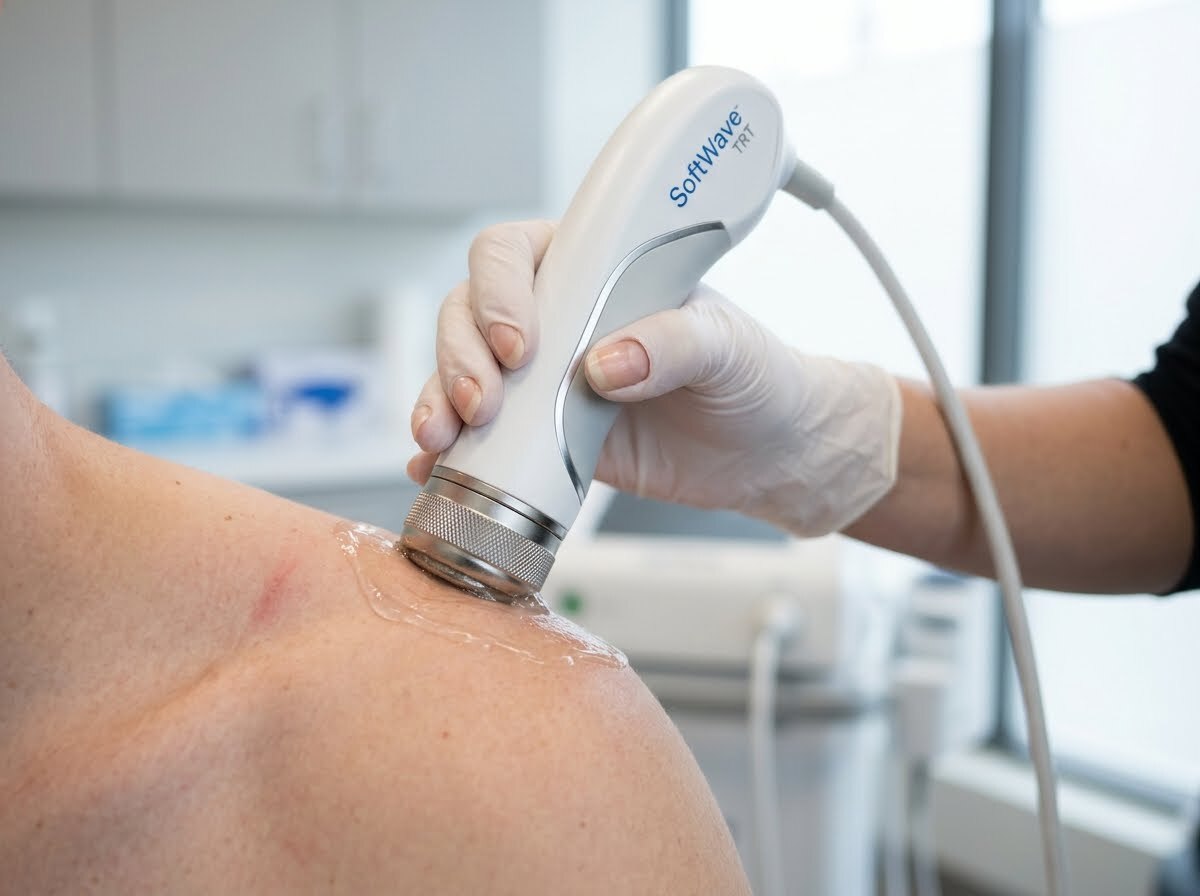
During treatment, a specialized applicator is placed against the skin over the targeted area. The device delivers acoustic pressure waves into the underlying tissues. Patients commonly experience a tapping or pulsing sensation. Some areas may feel more sensitive than others, particularly when treating chronically painful tissues. Treatment intensity can be adjusted according to patient tolerance.
After Your Appointment
Patients generally return to normal daily activities shortly after treatment. Temporary soreness, redness, or mild swelling can occur. Your provider may recommend temporarily limiting high-impact exercise or other activities that place substantial stress on the treated area.
How Many Sessions Are Needed?
The number of treatments depends on the condition being addressed, symptom duration, clinical response, and individual rehabilitation goals.
Some patients experience improvement early in treatment, while others require multiple sessions and additional time for meaningful functional changes.
Our team will discuss a recommended treatment schedule following your evaluation.
Who Is a Good Candidate for SoftWave TRT?
SoftWave TRT can be appropriate for patients experiencing persistent musculoskeletal discomfort, particularly when symptoms have not responded adequately to initial conservative care.
Potential candidates include individuals with:
- Chronic plantar fasciitis or heel pain
- Certain tendon and overuse injuries
- Persistent shoulder or elbow tendon pain
- Selected causes of knee pain
- Chronic soft-tissue discomfort
- Activity limitations associated with musculoskeletal conditions
SoftWave TRT is not appropriate for every patient or every source of pain. Certain medical conditions, treatment locations, pregnancy-related considerations, and other factors may require avoiding or modifying shockwave treatment.
A professional evaluation is essential before beginning therapy.
Why Choose Advanced Pain And Rehab for SoftWave TRT in Mint Hill?
At Advanced Pain And Rehab, our approach goes beyond temporarily addressing symptoms. We focus on understanding how pain affects movement, daily activities, and overall physical well-being.
Led by Dr. Doug Jordan, D.C., our team combines individualized clinical evaluations with conservative treatment strategies designed to improve function and support recovery.
Depending on your needs, SoftWave TRT may complement other available services, including chiropractic care, therapeutic exercises, and rehabilitation programs.
We proudly serve patients in Mint Hill, Matthews, Charlotte, and surrounding North Carolina communities who are looking for personalized, nonsurgical approaches to pain management.
Schedule a SoftWave TRT Consultation in Mint Hill, NC
Persistent pain does not have to prevent you from enjoying an active lifestyle. If chronic tendon discomfort, heel pain, or joint-related symptoms are interfering with your daily routine, our team can help determine whether SoftWave TRT belongs in your treatment plan.
Contact Advanced Pain And Rehab today at (704) 545-7700 to schedule a consultation and learn more about nonsurgical pain relief in Mint Hill, North Carolina.
Frequently Asked Questions About SoftWave TRT
Is SoftWave TRT the Same as Shockwave Therapy?
SoftWave TRT is a specific technology within the broader category of extracorporeal shockwave therapy. It uses broad-focused acoustic pressure waves to stimulate tissues and support biological responses associated with recovery.
Does SoftWave TRT Hurt?
Most patients describe a tapping or pulsing sensation. Sensitive areas can produce temporary discomfort, but treatment intensity can be adjusted to improve tolerance.
How Quickly Will I Notice Results?
Some patients notice changes in discomfort or mobility after early sessions. Others experience gradual improvement over several weeks. Response depends on the condition, symptom severity, and rehabilitation program.
Can SoftWave TRT Help Chronic Pain?
SoftWave TRT can help manage certain chronic musculoskeletal pain conditions, particularly selected tendon and plantar fascia disorders. It is not a universal treatment for all causes of chronic pain.
Does SoftWave TRT Require Downtime?
Routine daily activities can generally be resumed soon after treatment. Your provider may recommend temporarily avoiding strenuous exercise or heavy loading of the affected area.
Can SoftWave TRT Be Combined With Chiropractic Care?
Yes. When clinically appropriate, SoftWave TRT can complement chiropractic treatment, corrective exercises, and other rehabilitation strategies to address pain and movement limitations.
Is SoftWave TRT Covered by Insurance?
Coverage varies by insurance provider and plan. Many shockwave therapy services are self-pay. Contact our office at (704) 545-7700 to discuss current pricing and payment options.